Table of Contents
In today’s data-driven economy, trust is currency. If your company handles sensitive customer data, especially in SaaS, cloud computing, or IT services, being able to prove that your systems are secure is essential. That’s where Get SOC 2 Certification comes in.
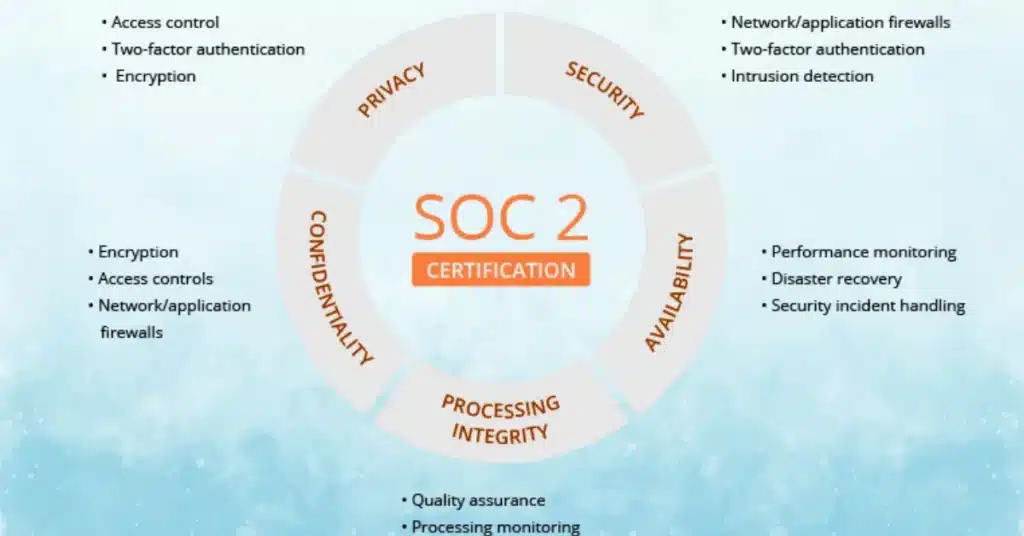
SOC 2 (System and Organization Controls 2) is a widely recognized auditing standard developed by the American Institute of CPAs (AICPA) to evaluate how effectively a service organization manages customer data. Achieving SOC 2 compliance demonstrates your commitment to security, availability, confidentiality, processing integrity, and privacy.
This article walks you through everything you need to know about getting SOC 2 certified from preparation to audit to maintaining compliance.
What is SOC 2 Certification?
SOC 2 is not a certification in the traditional sense it’s an attestation. After a successful audit, your organization receives a SOC 2 report from a licensed CPA firm, verifying that your systems and processes meet the requirements defined under the Trust Services Criteria (TSC).
There are two types of SOC 2 reports:
- Type I: Describes the system and evaluates whether controls are properly designed at a specific point in time.
- Type II: Assesses how well those controls operate over a period of time (usually 3–12 months).
SOC 2 Type II is more comprehensive and widely valued by enterprise clients. Organizations that achieve SOC 2 compliance often gain stronger credibility when selling to enterprise clients.
Why SOC 2 Compliance Matters
- Builds customer trust: Shows clients you take data security seriously.
- Gives you a competitive edge: Many enterprise customers require SOC 2 for vendor approval.
- Reduces risk: Helps identify and fix security weaknesses.
- Strengthens internal controls: Formalizes policies and procedures.
- Facilitates growth: Opens the door to regulated industries and markets.
Who Needs SOC 2?
SOC 2 is especially relevant for:
- SaaS providers
- Cloud-based service companies
- Fintech firms
- Health tech platforms
- Managed service providers (MSPs)
- Data analytics and storage companies
Any organization that stores, processes, or transmits sensitive customer data can benefit from SOC 2.
Enterprise Customer Demand for SOC 2 Increases
For the past several years, enterprise procurement organizations have made a big jump in vendor security evaluation. This year and over the past couple years more companies than ever expect to see a SOC 2 report as a precursor to a cloud provider, service partner, or software vendor accessing their sensitive data or networks. Because businesses are leveraging external providers to drive this digital transformation, Vendor Risk Management has become that more important andSOC 2 is a signal of trustworthiness in a business relationship.
The 5 Trust Services Criteria (TSC)
1. Security (mandatory) : Protection against unauthorized access and data breaches.
2. Availability : Ensuring systems are operational and accessible as agreed.
3. Confidentiality : Protection of confidential data from disclosure.
4. Processing Integrity : Ensuring systems process data accurately and completely.
5. Privacy : Proper collection, use, and disposal of personal information.
You must address Security at a minimum; others depend on your business model. For many SaaS companies, SOC 2 compliance directly impacts revenue growth because enterprise buyers frequently require it before signing contracts.
Steps to Get SOC 2 Certified
1. Define Your Scope
Start by identifying:
- Which systems, departments, or services are in scope
- Which Trust Services Criteria apply to your business
- Which type of report (Type I or Type II) you need
Keep scope focused to reduce complexity and cost.
2. Perform a Readiness Assessment
A pre-audit assessment (often done with a consultant) helps:
- Identify gaps in your current controls
- Evaluate documentation maturity
- Highlight remediation areas
This “gap analysis” ensures you’re well-prepared before the formal audit. Most growing technology companies ultimately pursue SOC 2 Type II because it provides stronger evidence that controls operate effectively over time.
3. Implement or Improve Controls
Based on the readiness assessment:
- Create and enforce security policies (passwords, incident response, change management, etc.)
- Implement tools for logging, monitoring, access control, backups, etc.
- Provide employee training on compliance practices
- Document everything clearly
Use frameworks like ISO 27001 or NIST to guide your security architecture.
4. Collect Evidence
For Type II, you’ll need to collect evidence over time to prove your controls are consistently followed. Examples:
- Access logs
- Security training records
- Incident reports
- Backup logs
Automated compliance tools like Vanta, Drata, or Secureframe can help manage evidence collection. SOC 2 Certification shows a commitment to protecting sensitive information.
5. Choose an Auditor
Only licensed CPA firms can perform SOC 2 audits. Choose one with:
- SOC audit experience in your industry
- Transparent pricing and timeline
- Strong reputation for quality
Your auditor will provide:
- An engagement letter
- A request list (what evidence they need)
- A formal audit plan
6. Undergo the Audit
The auditor will:
- Review documentation
- Interview staff
- Evaluate how well your controls meet SOC 2 criteria
For a Type II audit, this covers a defined period (e.g., 6 months). You must show that controls were followed consistently.
7. Receive Your SOC 2 Report
If successful, you’ll receive a SOC 2 attestation report, typically including:
An auditor’s opinion
- System description
- Details on each control and its effectiveness
- Any exceptions or issues found
You can share this report with customers under NDA as proof of compliance.
SOC 2 Timeline
- Readiness and remediation: 1–3 months
- Observation period (Type II only): 3–12 months
- Audit and reporting: 1–2 months
Total time to SOC 2 Type II: 6–12 months, depending on your preparedness.
Cost of SOC 2 Certification
- Readiness consulting: 5,000–20,000
- Automation software (Vanta, Drata, etc.): 10,000–25,000/year
- Audit by CPA firm: 10,000–40,000+
Costs vary by company size, scope, and audit complexity. Long-term, SOC 2 can save money by reducing risk and accelerating deals.
SOC 2 – Maintenance and Renewal
SOC 2 Type II is valid for 12 months. To stay compliant:
- Keep policies and controls updated
- Maintain security tools and monitoring
- Conduct periodic risk assessments
- Train new employees
- Plan for annual re-audits
Automated platforms can help streamline renewal and evidence tracking.
Common Challenges
- Unclear scope: Trying to cover too much too early
- Poor documentation: Incomplete or inconsistent records
- Manual evidence collection: Time consuming and error-prone
- Lack of internal buy-in: Compliance must be a company-wide commitment
Tips for Success
- Start with a readiness assessment
- Keep your scope focused
- Use automated compliance platforms
- Document everything consistently
- Train employees on security best practices
- Make compliance an ongoing process, not a one-time project
By planning strategically, leveraging the right tools, and partnering with a knowledgeable auditor, your organization can achieve and maintain SOC 2 compliance, setting the stage for long-term growth and resilience in a security conscious world.
Summary
SOC 2 Certification is arguably the most influential trust signal available for modern business. Successfully pursuing a SOC 2 path can ensure a company proves its security, matures its operations and alleviates any client concerns. Best in class SOC 2 paths include: Specifying project scope, Conducting readiness reviews,Establishing internal controls, Gathering evidence of controls, Undergoing an independent SOC 2 examination, Remaining compliant.
Organizations that make the right, strategically, will uncover advantages that extend far beyond merely meeting requirements. Maybe the greatest myth around SOC 2 compliance is that it should only be handled by the IT or security teams. Actually, organizations need every part of their business to be involved in successful SOC 2 compliance.
reparing Your Team for a SOC 2 Audit
SOC 2 compliance is not just a technology project. The processes supported by employees throughout the organization could be impacted for the performance of security or operational controls. Functions such as Human Resources, Engineering, Finance, Legal, customer support or Management have roles that can present evidence or be involved in compliance processes.
Employees can be trained in company policy relevant to their job function prior to the commencement of the audit. This training could include how to document a security incident, how to handle customer data appropriately, how to request and get system access granted, and which mandatory security training that needs to be completed.
Documenting responsibilities clearly avoids last minute challenges. Identifying the control owner of each activity will ensure each owner knows what evidence needs to be kept and what cadence has been put in place for that activity to take place.
Building a SOC 2 Security Policy Framework
Several controls within a SOC 2 audit will have policy underlying it. An organization typically maintains policies on the topics of information security, access management, change management, incident management, risk management, vendor management and business continuity. Don’t create policies merely because an auditor anticipates seeing the documentation.
Instead, your policies should reflect how the organization is actually doing business. Companies will risk more confusion by developing and implementing a set of policies that no employees enforce as a matter of practice. Work to keep your policies practical, simple, and ensure that they are subject to review on an ongoing basis. As technology, people and/or operations change within the organization it makes sense to take another look at any associated policies.
A well-developed policy structure drives uniformity in the organization and assists employees in identifying their role in safeguarding company and customer data.
Access Management and SOC 2 Controls
Access management is another critical area in SOC 2 because many organizations will need to show how people have the rights level to use data and systems, and can not access data or systems they do not require.
Organizations can demonstrate the use of role-based access controls, and use employees positions within the company to issue them with the correct level of access. These levels of access will need to be reviewed regularly to ensure a person still requires all of the permissions.
Special attention should be paid to staff induction and leaving the service and data. Provision must be made when new employees are required and permissions granted, and for users to lose their permissions when role changing or leaving their employment with the company.
Vendor Risk Management for SOC 2
Many service providers (such as hosting companies, payment providers, communication and analytics systems, and development vendors) are the outsourcing and managing several mission critical services that a company need in a client provider relationship within the overall risk environment of the service provider, so third parties are part of the organizational risk.
Vendor risk management processes can facilitate the identification of which providers the company’s sensitive data or critical systems are accessed to. The evaluation of vendors can based on their security policy, terms of contract, business data handling policy and compliance certifications.
In addition, vendors can produce their own SOC reports. When organization get this report, we can easily get more understanding to vendor on controls which are important service providers maintain.
Vendor risk management should be ongoing. After approval for the vendors selected, periodically reviews and update should also take into account.
Key Takeaways
– One of the most well-known information security compliance certifications for service organizations.
– Allows an organization to demonstrate to customers that they manage data security properly.
– The Type II SOC 2 certification is favored by most enterprises.
– Achieved through improvements in security posture, operational effectiveness, and assurance.
– Take between 3 months and 1 year to attain a level ofSOC 2readiness.
– Reduce audit burden with compliance automation tools.
– Faster closing times for SOC 2-certified companies selling into enterprise deals.
– Maintaining compliance isn’t a once-and-done, but an annual practice.
Conclusion on SOC 2 Certification
SOC 2 Certification is a powerful way to prove that your organization takes security and data protection seriously. While the process requires time and investment, the payoff includes enhanced customer trust, improved internal security posture, and smoother enterprise sales. With proper implementation SOC 2 should do more than get you through your audit. It will be your cornerstone for building trust, resiliency, and ultimately the key to your competitive advantage in today’s marketplace that is more awareness conscious of cybersecurity.
The short answer is yes, if your company handles personal information about its customers. SOC 2 Certification isn’t something that companies try to achieve and then forget. Today in some fields, becomingSOC 2-certified is simply part of the cost of doing business. Companies obtain certifications, win business and build customer trust. They make security processes stronger, improve discipline and make customers feel more confident for the long term.