Table of Contents
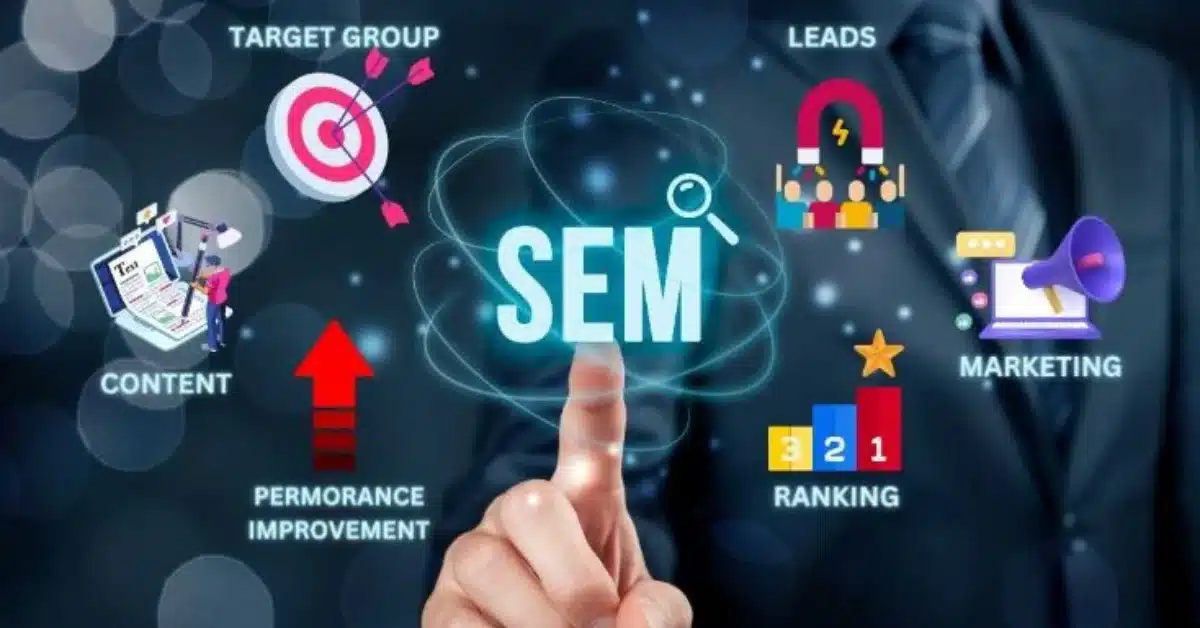
In the digital marketing landscape, search engine marketers play a vital role in helping businesses boost their online presence and connect with their target audience. As we enter 2026, the field of search engine marketing (SEM) is undergoing significant transformations driven by technological advancements, changing user behaviour, and market trends. The primary goal of SEM is to connect businesses with potential customers at the moment they are actively searching for information, products, or services.
Why Search Engine Marketing Matters
The Importance of Search Engine Marketing With the internet playing a huge role in our lives today, shopping behavior has changed dramatically. Almost all consumers research products, analyze reviews, and compare alternatives when making a purchase.
Using SEM, your customers can see your goods and services in front of them just when the time comes. Traditional media broadcasting to the multitudes SEM is for the people ofintent the people who already have thewant,needorrequirementwhich will be or can be met.
Another huge benefit of Search Engine Marketing (SEM) is its ability to gain traction quickly. Where it could take months for traditional SEO to start driving considerable traffic to a website, SEM can begin directing users right after a campaign goes live.
Key Trends in Search Engine Marketing
The key trends shaping search engine marketing include the dominance of AI-powered tools, which enable businesses to automate and optimize their campaigns for greater efficiency. AI-driven algorithms can analyze vast amounts of data to predict user behaviour, optimize bidding strategies, and create personalized ads. Voice search optimization is also crucial, as 20% of mobile queries are now voice-based. Additionally, visual and video search are becoming increasingly important, with search engines prioritizing video content in search results.
To succeed in SEM, businesses should invest in AI-powered platforms that provide advanced analytics and automation. These tools can help marketers reduce manual workload, optimize ad targeting, and increase return on investment (ROI). Optimizing content for voice search using natural language and long-tail keywords is also essential. Incorporating video content into SEM efforts, using platforms like YouTube and Google’s video Ad network, can also drive engagement and conversions.
Personalization is becoming more refined, with businesses having access to more data about their audience. Marketers will focus on delivering highly personalized ad experiences to users based on their search history, preferences, and behaviour patterns. Search everywhere optimization is also crucial, with businesses needing to optimize their content for search everywhere, including voice search, image search, and conversational search.
The future of search engine marketers is exciting and rapidly evolving. As AI technology continues to advance, we can expect to see even more sophisticated and personalized advertising experiences. Businesses that stay ahead of the curve and adopt proven strategies will gain a competitive edge in the digital marketplace.
To stay ahead, businesses should focus on delivering highly personalized ad experiences, leveraging video content, and optimizing for voice search. Staying informed about emerging trends and adopting proven strategies will also help maximize marketing efforts. By embracing these changes, businesses can unlock the full potential of search engine marketers and drive growth in the digital age.
Strategies for Success in Search Engine Marketing
Some key strategies for success in SEM include investing in AI-powered platforms, optimizing for voice search, using video content, focusing on personalization, and staying up-to-date with emerging trends. By following these strategies, businesses can stay ahead of the competition and achieve their marketing goals.
The future of search engine marketing holds much promise, with AI-driven advancements leading to more sophisticated and personalized advertising experiences. Businesses that adapt to these changes will be well-positioned to succeed in the digital marketplace.
It is not just the keywords which are associated with the search volume that you should consider. Do a mapping of the keywords to the stages of the user journey which are the awareness, consideration, and decision. The copy of your ads as well as the landing page should meet the real inquiry that is hidden behind the search.
Separate campaigns for the objectives of top- middle- and bottom-funnel will not only give you clearer insights but also allow you to have better control over the budget and communication that really resonates at every stage. What matters is the relevance and not the aggressive bidding. The proper alignment of the ads to keywords, the loading pages with a very fast speed, and the availability of clear CTAs all contribute to the strengthening of the Quality Score, hence the cost is reduced and the ad rank is elevated naturally.
The Future of Search Engine Marketing
The future of search engine marketing (SEM) is exciting and rapidly evolving, with several key developments on the horizon. Artificial intelligence (AI) and machine learning (ML) will continue to play a larger role in SEM, enabling businesses to automate and optimize their campaigns more effectively. Voice search will also grow in importance, with businesses needing to optimize their content for natural language queries to stay competitive.
Visual and video search will become increasingly important, with businesses needing to incorporate video content into their search engine marketers efforts to stay ahead. Personalization will also become even more critical, with businesses needing to deliver highly personalized ad experiences to users based on their search history, preferences, and behaviour patterns.
AI and ML are transforming search engine marketing in several key ways. Predictive analytics can analyze vast amounts of data to predict user behaviour, optimize bidding strategies, and create personalized ads. Marketing mix modelling will help businesses measure the effectiveness of different marketing channels, ensuring a data-driven approach to budget allocation and campaign performance. AI-powered SEM platforms provide advanced analytics and automation, allowing marketers to reduce manual workload, optimize ad targeting, and increase return on investment (ROI).
To leverage AI in SEM, businesses should invest in AI-powered platforms, use data-driven insights to inform their strategies, and stay up-to-date with the latest trends. By doing so, they can optimize their campaigns for maximum ROI and stay competitive in the digital marketplace.
Real-World Example
“I want more service calls for our plumbing business.” Our local plumber friend in Atlanta Here is the plan we set up for him. Instead of targeting broad keywords such as: Plumbing service plumbing Atlanta… etc .
We optimized it to target long tail, location specific keywords like: 24 hour plumbing Atlanta Plumbers near me Emergency plumberAtlanta “After 3 months of launching the SEM campaign with a focus on those long tail and location specific keywords, our friend not only started receiving more qualified leads but he actually spent less on his advertising efforts. He also optimized his landing pages to improve on conversion rates” . That just goes to show you what StrategicSEM can do for your business
Some Best practices for leveraging AI in SEM include
- Invest in AI-powered SEM platforms that provide advanced analytics and automation
- Use data-driven insights to inform SEM strategies and optimize campaigns for maximum ROI
- Stay informed about the latest developments in AI and ML to ensure SEM strategies remain competitive and effective
- Cross-Channel Optimization it Integrate SEM data with other channels (e.g., email, social) for unified, AI-driven attribution and budgeting.
- In Predictive Analytics Forecast campaign performance and budget allocation using historical and real-time data.
- In Competitor Gap Analysis Automation Apply AI tools to continuously scan competitor ad copy, landing pages, and keyword gaps surfacing actionable opportunities before manual audits can.
Understanding Search Intent in SEM
One aspect search engine marketers cannot over-emphasize when setting up their paid search campaigns is search intent. While the mere presence of a keyword does not guarantee what you actually want with it. It’s very possible that there may be two persons with very different intentions, but have similar search queries.
Let’s take an example. A search query for “best accounting software” may reveal that the surfer is still considering her options. But another query such as “buy accounting software for small business” is already nearing the conversion funnel. If the treatment is similar then you are obviously spending your ad funds very ineffectively.
Campaigns may perform better by organizing keywords into informational, commercial, navigational and transactional, match that intent to advertisement, landing page, offer and call to action, to deliver consistent user experience from initial search query to the final conversion.
Keyword Research and Campaign Structure
One is what works as far as research for Keywords. Businesses need to aim for not just search volume for each of your terms but ones relevant to your businesses, products, services, audience, as well as your ultimate business goal.
By understanding you needs for what to research terms for you could discover words with a good relevance and then take those long-tail keywords which would also generally pinpoint what need a customer may have for your business. Although search volume is often less then those of broader keywords they reach a user with specific intentions to find something specific with the keyword research.
One is how to organize your campaign properly. The ways you can separate business campaigns according to product line, location in the world, customer intent, or a business goal; these methods of organizing campaigns provide knowledge of areas within your campaign who aren’t performing and also performing as they could and which ones bring in worthy traffic.
One is what negative keywords and their job, not making you run ads for un-related things so that marketers don’t waste budget.
Creating High-Quality SEM Advertisements
Your search ad should be clear to a potential customer exactly why they need to do business with you, and the headline, description, offer and call to action should work together as a cohesive unit. It shouldn’t seem like 4 separate parts tacked together. Your search ads can discuss benefits, price points, convenience, experience, guarantees, location/service areas, and anything else the customer cares about, but marketers should be cautious of unproven claims.
Test alternative ad copies to see how they perform don’t change too many elements, rather test one feature at a time and see how it impacts clicks.
We’re not just after clicks, we’re looking for leads.
Landing Page Optimization for SEM
There’s nothing that can kill SEM efforts quicker than sending paid traffic to a bad landing page. We can put the best ads together but it will fall to a heap if customers can’t easily find out who the company is or what action to take next. A good landing page must also be highly relevant to the keywords you’re targeting and advertisement the user click in the past.
They must download really rapidly. The pages must also work equally as quickly as it did over desktop devices, and have a truly very clear indication as the action the client must require next. Make it very easy.
There could be only needed fields on any type of types, which no extra obstacle might prevent them from converting. If one are looking for for phone calls, then make sure the amount is easily found.
Any type of type you add in which does not add or lead a consumer towards the desired conversion can cause you to shed a possible client.
Summary
How to Improve Your Search Engine Optimization Efforts Search Engine Marketing SEM is one of the most powerful digital channels for targeting customers who have a buying intent and want to do it as soon as possible. By selecting keywords carefully, crafting and placing attractive ads, directing traffic to well-designed, landing pages and tracking the performance of these efforts on an ongoing basis, companies can drive high-quality traffic and get results.
If you want to gain immediate online visibility, then SEM should probably be a priority for your marketing team, if the goal is an immediate boost that will generate conversions. Though on-page optimization helps to boost visibility long term, you want the customers who intend to buy and pay as soon as they possibly can now.
Final Words
By actively staying informed about the latest trends, algorithm updates, and emerging technologies in Search Engine Marketing (SEM) such as AI-driven bidding, automation, and evolving ad formats businesses can adapt their strategies in real time, maximize ROI, and maintain a competitive advantage. This proactive approach ensures more precise audience targeting, improved ad relevance, higher conversion rates, and stronger brand visibility all critical for achieving short and long-term marketing goals in an increasingly dynamic digital landscape.
For one, keywords research because that’s what makes ads ultra-targeted, at first. Finally ensure each conversion in the search campaign is tracked. so over time, test, convert leads, bring in traffic, and drive up sales. A successful SEM strategy is not simply about generating traffic. The ultimate goal is attracting customers who provide lasting value to the business.