


Table of Contents
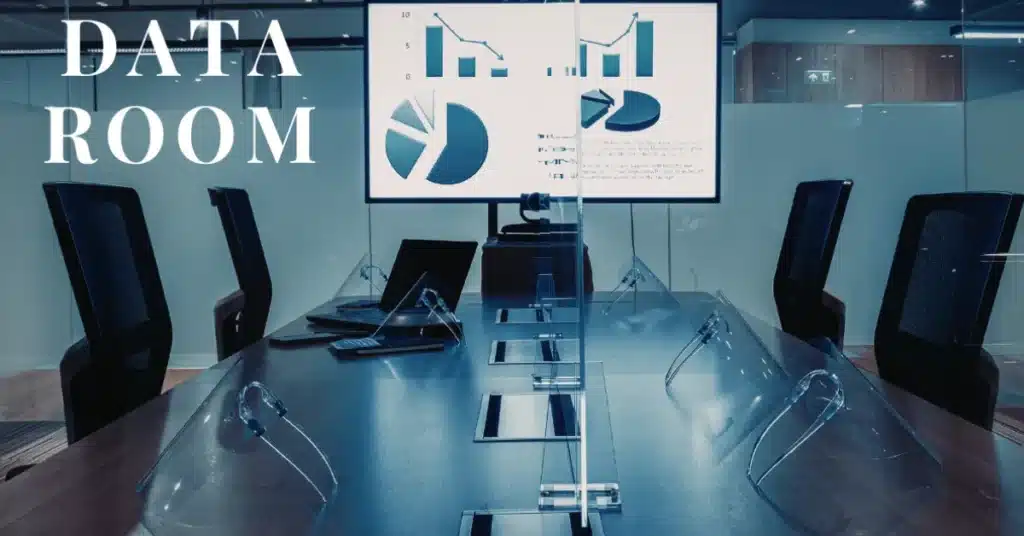
In digital world, information is one of the most valuable assets for any organization. Companies, institutions, governments, and even individuals deal with large amounts of confidential and sensitive data every day. To store, organize, share, and protect such important information securely, the concept of a Data Room is used. A data room is a safe and structured place where important documents and data are stored and accessed only by authorized people.
Meaning of Data Room
A Data Room is a secure space used to store confidential documents and data. Traditionally, data rooms were physical rooms where documents were kept in files and cabinets under strict supervision. Only selected people were allowed to enter the room and view the documents.
With the advancement of technology, physical data rooms have mostly been replaced by Virtual Data Rooms (VDRs). A virtual data room is an online secure platform where documents are stored electronically and can be accessed through the internet using login credentials.
Types of Data Rooms
There are mainly two types of data rooms:
1. Physical Data Room
A physical data room is an actual room, usually located in a company’s office. Important documents are kept in printed form. Security guards, locks, and entry registers are used to protect the data. Only one person or group can access documents at a time.
Disadvantages of physical data rooms:
- Time-consuming
- Expensive to maintain
- Risk of document loss or damage
- Limited access
Due to these problems, physical data rooms are rarely used today.
2. Virtual Data Room (VDR)
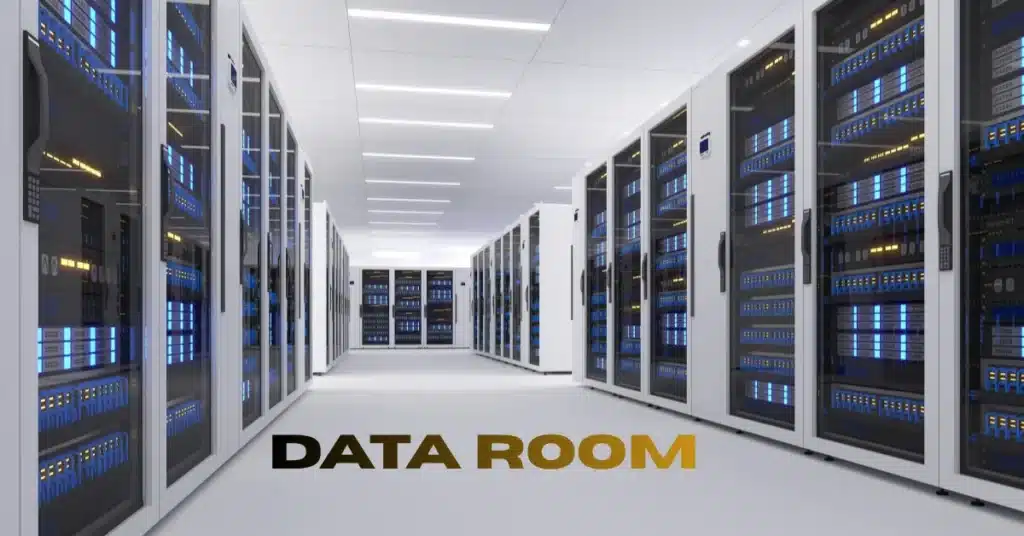
A virtual data room is a cloud-based digital storage system. Documents are uploaded in electronic form and accessed through computers, tablets, or mobile phones.
Advantages of virtual data rooms:
- Accessible from anywhere
- High security
- Saves time and cost
- Multiple users can access simultaneously
- Virtual data rooms are widely used in modern businesses.
Purpose of a Data Room
The main purpose of a data room is to securely share sensitive information with selected people. It ensures confidentiality, accuracy, and controlled access to data.
Some important purposes are:
- Protecting confidential data
- Sharing documents safely
- Maintaining transparency
- Supporting decision-making
- Preventing data misuse
- Uses of Data Room
Data rooms are used in many fields. Some major uses are explained below:
1. Business and Corporate Sector
In companies, data rooms are used during:
- Mergers and acquisitions
- Business partnerships
- Audits
- Financial reviews
Important documents such as balance sheets, contracts, employee records, and legal documents are stored in data rooms.
2. Legal Field
Law firms use data rooms to store:
- Case files
- Evidence documents
- Client information
- Legal agreements
This helps lawyers share documents securely with clients and courts.
3. Banking and Finance
Banks and financial institutions use data rooms to store:
- Loan documents
- Investment reports
- Customer data
- Compliance records
Security is very important in this sector, and data rooms help maintain confidentiality.
4. Real Estate
In real estate transactions, data rooms store:
- Property documents
- Sale agreements
- Land records
- Legal approvals
Buyers and sellers can access required documents safely.
5. Education and Research
Universities and research organizations use data rooms to store:
- Research data
- Student records
- Examination papers
- Academic documents
Access is given only to authorized staff.
Features of a Data Room
A data room has many important features that ensure safety and efficiency:
1. Security
Data rooms use:
- Password protection
- Encryption
- Two-factor authentication
This prevents unauthorized access.
2. Controlled Access
Administrators can decide:
- Who can view documents
- Who can download files
- Who can edit data
This ensures proper control over information.
3. Document Tracking
Data rooms keep records of:
- Who accessed the document?
- When it was accessed
- What changes were made?
This improves accountability.
4. Data Organization
Documents are arranged in:
- Folders
- Subfolders
- Categories
This makes searching and managing data easy.
5. Backup and Recovery
Most data rooms provide automatic backups. Even if data is lost accidentally, it can be recovered.
Advantages of Data Room
Some major advantages of using a data room are:
- High level of security
- Easy sharing of documents
- Saves time and paper
- Reduces operational costs
- Improves efficiency
- Supports remote work
- Environment-friendly
Disadvantages of Data Room
Though data rooms are very useful, they have some limitations:
- Requires internet access
- Initial setup cost
- Technical knowledge required
- Risk of cyber attacks if not managed properly
However, these disadvantages can be reduced with proper management and security measures.
Importance of Data Room in Modern World
In the modern digital era, data is growing rapidly. Organizations deal with confidential information daily. Data rooms play a vital role in:
- Protecting sensitive data
- Ensuring legal compliance
- Supporting global business operations
- Improving trust between stakeholders
Without data rooms, managing large amounts of confidential information would be very difficult.
Latest Development
A Data Room, especially a Virtual Data Room (VDR), is a secure online platform used to store, manage, and share confidential information. In recent years, data rooms have become cloud-based and use advanced security features such as encryption, multi-factor authentication, and real-time activity tracking.
They are widely used in mergers and acquisitions, legal processes, banking, and remote business operations. Modern data rooms support artificial intelligence for faster document search and analysis. With the rise of digital transactions and remote work, data rooms play a vital role in ensuring data security, transparency, and efficient collaboration across organizations.
How Does a Virtual Data Room Work?
Virtual Data Room as a safe place online. A virtual data room is a secure digital space where an organization can store, review, upload, and organize sensitive documents. Instead of uploading documents with secret files attached to a standard e-mail, or saving them to personal removable devices, users save them in a protected online repository.
The Data Room is usually created by an administrator, who grants permission for users.
Each user has his access based on his role an investor would have access to all financials, whereas the law council would have access to all contracts and all compliance issues. When a user joins the platform, the user could find them by files, folder, indexes etc. The administration can view all actions in the platform and grant permission to view, print, download, edit, or forward files. Virtual Data Room is therefore a controlled space, and should be used when several users are in need of accessing sensitive files, but are not supposed to access all of them.
Data Room Security
It is also one of the biggest factors you want to consider when choosing a data room. You are storing highly sensitive information such as legal, financial, strategic and personal data and if it is compromised you may incur serious financial losses, damage to your reputation, be hit with heavy fines from regulators or be involved in legal battles.
Most modern virtual data room vendors should offer several forms of protection, this can include encrypted data in transit, in storage, multi-factor authentication, user-level access controls, secure login functionality and monitoring of user activity. It should even be possible for you to limit the actions a user can take.
You can grant the ability for a user to read a file but not print it or download. Some providers even allow water marking of your files so it is clear who and from where they were obtained. Security should also not be treated as a single feature but the entire security infrastructure of the whole platform.
Data Room for Due Diligence
Due diligence necessitates looking thoroughly at certain information prior to making an investment, or undergoing the process of selling a company, initiating a strategic partnership, or closing a significant business transaction. A data room helps structure that kind of investigation, since files can be organised into different due diligence topics. A company might divide its data, into separate financial sections, or sections addressing legal, as well as operational data.
It would possible to see which users had accessed documents in the data room, and when, and in what order documents had been looked at.
That might well give a good insight into potential partners interests in the business, and on areas on which it would be advisable to throw further light.
Data Room and Document Management
The Challenges of Managing Numerous Confidential Documents If the organization uses email attachment, shared drivers, physical paperwork or even consumer use the “cloud” for document storage then document management system can prove chaotic with a large quantity of documents. To solve this problem, a data room can serve to house many confidential documents in one central site.
You can set up consistent organization based on projects and naming conventions; as well as create classification by department, transactions or document category.
Another part of document control to factor into your system concerns documents in a state of “work” and the threat of people taking out old versions without realizing.
In addition to document management, the centralized method should make it straightforward to recover data at a time of need.
Data Room Activity Tracking and Audit Trails
Audit trails can be particularly useful for when sensitive data is to be shared with a third party.
Activities such as the login or logoff of users, the viewing of or download of a document and any searches conducted can be recorded by a data room. This information may then be made available for an administrator to view through activity reports on many data room solutions.
This information adds further insight to the usage of highly confidential data. Audit trails can also assist with internal investigations and compliance processes. If a decision needs to be made on whether or not a specific document has been accessed, activity reports can be helpful evidence.
This provision of evidence can help to document the access of information that a regulated business is required to maintain in order to comply with other relevant governance and accountability regulations.
Data Room for Real Estate Transactions
Real Estate transaction could be a complicated process involving masses of paperwork. Buyers, financiers, investors, developers, legal professional, and also the varied parties to the purchase. In a digital room, the documents related to property possession details, inspection reports, leases, environmental analysis reports, permit documentation, financial knowledge, and agreements.
You can provide completely different levels of access depending on their role. If the deal is massive and therefore the number of parties is large, then a central on-line document will definitely be well-organized.
Data Room for Legal and Compliance Requirements
For companies Legal and Compliance departments, much of the content to be handled consists of sensitive and confidential matters. This may range from agreements, regulatory filings, dispute/litigation-related documents, intellectual property, and company policies. All of these types can benefit from being kept secureand restricted within your own company system or in a protected digital environment.
A data room allows for these documents to be stored, organized, and disseminated securely. Organizations may design permission protocols that disallow certain individuals or entities from gaining unauthorized access to proprietary legal contents.
Moreover, Audit and Monitoring capabilities allow companies to ensure better tracking and control. Nevertheless-that alone doesn’t ‘ensure’ compliance in and of itself, as compliance remains dependent on your company’s security policies, system setup, procedures, relevant laws, and how they all interact on your chosen platform.
Conclusion
A Data Room is an essential tool for storing and sharing confidential information securely. From traditional physical data rooms to advanced virtual data rooms, the concept has evolved with technology. Today, virtual data rooms are widely used across industries such as business, law, banking, education, and real estate.
With features like high security, controlled access, document tracking, and easy data management, data rooms ensure safety and efficiency. Although there are some challenges, the benefits of data rooms far outweigh the disadvantages.
In conclusion, data rooms play a crucial role in the digital age by protecting valuable information and supporting smooth and secure operations. As technology continues to advance, the importance of data rooms will only increase in the future.